
Process orchestration is the end-to-end integration, coordination, automation, management and governance of every part that moves a piece of work forward, from people and workflows to technology.
Digital transformation has delivered fast, intelligent automation tools for automating individual tasks, but zoom out and the overall speed of operations is still constrained. Modernization has meant adopting a wide estate of tools.
For many processes some steps are now faster, while others that were once linear have grown to span fragmented landscapes of disparate systems, legacy systems, enterprise applications, custom API services and hard-to-standardize human collaboration points.
The goal is a unified digital workplace: teams execute whole modeled, end-to-end tasks in one place, with every required system integrated behind the scenes, so people no longer navigate across scattered channels, platforms and tools.
Orchestration brings strategic value. As well as coordinating people and tools, it manages the other concepts that coexist in the automation ecosystem.
Task automation (localized action): the use of technology, typically robotic process automation (RPA), deterministic scripts or simple code, to perform specific individual actions, often without human intervention. It is highly effective for high-volume, repetitive, straightforward work such as manual data entry, but these automations stay isolated and have no inherent connection to the broader business flow without orchestration. A script that sends a single invoice is task automation.
Process automation (business process automation, BPA): the holistic objective achieved by mixing and aligning task automations toward a goal. It is the successful automation of an entire business process, where the degree of automation varies across the workflow.
Process orchestration (centralized coordination): the technology that coordinates all the moving parts of a business process, including people, systems, AI agents and devices, together with process automation, and ties multiple processes into a unified whole. It acts as the conductor of the process, managing interactions, dependencies and flow control, and making sure every task runs at the right time. It is the enhancement of process automation, and what most people mean when they refer to business process orchestration.
Organizations often accumulate numerous single-purpose automation tools, such as individual RPA bots or tailored scripts. Effective at first, this builds significant technical debt and integration challenges. When task automation focuses only on one action, the vital connections between actions, the handoffs, error management and sequencing, are left to manual effort or fragile custom code, which costs speed and erodes reliability.
By coordinating the whole journey toward a larger goal, such as checking inventory, creating the invoice, updating records and notifying shipping, process orchestration is the consolidation layer that gives enterprise automation reliability and scale. For a fuller side-by-side of workflow automation versus orchestration, see our dedicated comparison.
Process orchestration does not replace business process management (BPM); it fulfills BPM’s technical promise.
Business process management (BPM): the overarching discipline analysts and executives use to study and map existing work paths, design new goals and workflows, monitor them, and continuously improve how work flows. It is the strategic blueprint, the methodology and the executive vision for process improvement.
Business process modeling: to realize the benefits of digitalisation and integrate technologies like AI and orchestrated automation, organizations need to capture the benefits of business process management through software-modeled processes. Processes built on a central operating layer bridge the gap between management vision and IT execution. This is where business process modeling and digital BPM platforms enable transformation. Modern enterprise automation and orchestration platforms such as Flowable connect strategy to reality through workflows built for scale and reuse. Modeled processes can then be improved with automation, AI-agent collaboration and drag-and-drop modeling, turning operations into measurable, compliant, efficient value streams. Process modeling and management is the backbone for safely applying intelligent automation, integrating next-generation AI, and running efficient regulatory work at enterprise scale.
Process orchestration’s role: orchestration sits inside this broader discipline as the execution layer that makes the BPM blueprint real. The orchestration engine executes the modeled process logic at scale, and layers in your other technologies, tools, people and governance.
The power of this relationship is the use of executable models, such as those defined by the Business Process Model and Notation (BPMN) standard. Standards like BPMN and Decision Model and Notation (DMN) provide a common visual, drag-and-drop language that aligns IT teams with business stakeholders, so the modeled diagram is exactly what runs in production. That shared understanding removes communication gaps and builds trust in automated workflows.
Orchestration spans from execution to reasoning, and from linear flows to the dynamic coordination seen in real-world automation use cases. Standard process flows are superb at executing decisions that are already made; they encode a predictable, deterministic world.
At the other end, real-world interactions that evolve less predictably, especially those involving human and AI judgment such as customer interactions or investigations, unfold as new information appears. People and intelligent agents follow leads, backtrack and adapt, which is not a linear script. A flow executes decisions; it does not reason through them.
To model intelligent work accurately at runtime, the focus shifts from procedural modeling (rigid steps) toward contextual modeling (the evolving situation, data and collaboration). This contextual approach is central to modern orchestration because it mirrors how human and agent cognition works: adaptively integrating new data as the process unfolds.
On a technical level, orchestration is not the only option. Coordination decisions usually come down to centralized orchestration or decentralized choreography.
Choreography (decentralized flows): operates without a central controller. Services react autonomously to events, and the overall flow emerges from their independent interactions. It suits highly independent services that need little coordination, but that flexibility costs centralized visibility and control.
Orchestration (centralized control): a central conductor or engine controls the flow, holds the persistent state of the process and tracks results. Orchestration is needed as process demands grow, when governance must be centralized across multiple systems, and when an end-to-end audit trail is mandatory.
The most robust enterprise architectures often use a hybrid model. Orchestration centralizes the end-to-end management and automation of critical processes, while choreography can simplify local interactions between sub-components, giving agility, oversight, control and coordination across the whole organization.
Flowable integrates choreography into orchestration with native support for event-streaming platforms such as Kafka and RabbitMQ. This lets BPMN constructs like the event-based gateway subscribe to external events and react dynamically, so the central orchestrator reliably governs decentralized, event-driven service actions.
Concept | Primary focus | Control structure | Role in the end-to-end process | Key trade-off |
Process orchestration | Coordinating all tasks (people, systems, agents) across a full workflow. | A centralized conductor manages flow, state and errors. | Executes and controls the entire end-to-end process. | High control, strong observability. |
Task automation | Performing a single, repetitive action. | Isolated (local to the system or bot). | Component action within a larger flow; no sequencing control. | High local efficiency, zero process visibility. |
Choreography | Defining the flow of local, independent interactions. | Decentralized; services react to events. | Provides agility but sacrifices centralized visibility and control. | High flexibility, low centralized governance. |
Business process management (BPM) | Studying, designing and improving the whole process discipline. | Management framework (strategic layer). | Provides the blueprint and goals for orchestration to execute. | Strategic discipline, non-technical execution. |
An enterprise-grade process orchestration tools and platforms need a sophisticated architecture that handles demanding workloads, ensures reliability and maintains auditability across long-running workflows. It must be far more than a simple workflow tool: it must support a persistent execution environment, or state, which means the system remembers what stage a process has reached over long timeframes until completion.
The orchestration engine is the central brain of how work gets done. Its role is to translate the designed process model into scalable, reliable execution.
What distinguishes an orchestrator engine from simpler stateless integration tools is its ability to handle persistent state: remembering what has been done so far while managing long-running flows. For long-running, multi-day processes such as loan origination, compliance reviews or insurance claims, the engine reliably tracks status across time and system boundaries. It directs tasks, keeps order, decides which steps run in parallel and manages dependencies, so every participant, system, AI agent or device plays its part in the right order with the right data.
Effective orchestration depends on integrating the right components and existing tools to govern the flow of data and decisions.
Data integration and exchange: robust, API-led integration pulls information from many enterprise sources, enabling the communication and information exchange the organization needs.
Rule-based decision-making: to add internal logic and reduce where human intervention is needed, orchestration platforms apply predefined rules and criteria, for example DMN decision tables, to automate decisions such as approving requests or routing tasks against defined thresholds.
Unified automation endpoints: an orchestrator is technology-agnostic, integrating existing and emerging automation, including RPA, intelligent document processing (IDP), APIs and AI models, into one workflow.
For enterprise use, regulated industries and mission-critical applications, an orchestration platform must meet stringent demands far beyond basic execution.
Governance and auditability: orchestration platforms address critical compliance and governance needs. By providing complete, consistent audit trails and enforcing security policies across every work instance, they help organizations meet regulatory demands while staying agile.
AI agent governance and audit trails point to a critical shift in automation: the need to build fundamental confidence in end-to-end processes, especially those involving non-deterministic AI agents.
When outcomes are undesirable or non-compliant, the orchestrator is the definitive accountability record, the audit trail that confirms the exact data given to the AI, the specific action the agent took, and the path the orchestration logic then chooses. This makes the orchestrator the layer that builds organizational trust and lets you scale AI safely, with guardrails the organization controls and applies across every work instance.
Scalability and adaptability: orchestration platforms are resilient and scale to run any process at the required speed, handling demanding operations, scaling quickly with demand and adapting to sudden changes in the market or the process.
Shift to predictive operations: modern orchestration moves beyond reactive control toward predictive and autonomous operations. With intelligent-automation elements such as machine learning and predictive analysis, an orchestrator analyses historical data, using techniques like process mining, to anticipate errors or bottlenecks before they occur, so teams can act proactively.
The strategic need for process orchestration is well understood by orchestration-capable software, and its growing importance is validated by leading analysts, who point to new architectural frameworks focused on consolidation and the governance of adaptive intelligence.
Gartner recognizes enterprise process orchestration not as a passing technology but as a structural imperative for fragmented tech stacks. Over recent years it has gained rapid traction as the architectural backbone for coordinating processes, APIs and automations across enterprise systems.
It is now widely recognized as the foundational enabler for AI-driven and agentic automation. Gartner forecasts that by 2029, 80% of enterprises with mature automation practices will move to consolidated platforms, such as business orchestration and automation (BOAT), that orchestrate business processes and agentic automation.
Reflecting the market’s need to consolidate, Gartner identified business orchestration and automation technologies (BOAT) as a new class of platform: a consolidated software platform that delivers enterprise process automation by unifying capabilities once fragmented across BPM, RPA, iPaaS and low-code development, while governing AI adoption. Orchestration is widely recognized as the enterprise framework that makes AI-agent use possible.
This consolidation is driven by the mandate to remove the silos of historical tech adoption, reduce technical debt, maximize operational efficiency, simplify demanding business processes, and govern AI orchestration as adoption grows. Specialized and generative AI are expected to accelerate BOAT adoption, because BOAT platforms enable autonomous, intelligent orchestration of tasks that once required human intervention and laborious knowledge work.
Adaptive process orchestration (APO) is the strategic framework for achieving autonomous, agentic operations, and the critical reference point for leaders integrating autonomous enterprise technology. APO integrates AI agents, non-deterministic control flows and traditional automation to manage demanding, long-running business processes with autonomous decisioning.
To meet APO’s demands, orchestration platforms support key capabilities for agentic process management: model option and constraint management, the ability to create and manage AI agents, and, above all, robust governance, data and intellectual-property protection. For Forrester, automation agility, governance-first AI and AI-agent readiness are crucial, and enabled by enterprise orchestration platforms.
The analyst consensus points one way: the future of orchestration blends structured, deterministic process logic with dynamic, AI-driven decision-making. Dynamic orchestration builds that foundation, letting processes adapt in real time to unforeseen circumstances.
That dynamic execution must not compromise enterprise integrity: the platform must keep real-time adaptability within centralized governance, compliance and auditability throughout execution. Governing the non-deterministic nature of AI agents safely is the central market challenge that process orchestration answers.
The focus has shifted from how to automate across technology, people and processes to how to control adaptive intelligence safely and at scale.
Framework | Source | Primary objective | Key architectural mandates | AI / agent focus |
Business orchestration and automation technologies (BOAT) | Gartner | Consolidating disparate technologies into one platform for maximum efficiency and reduced technical debt. | Enterprise connectivity, enterprise AI, low-code development, a unified platform, operational scalability. | Explicitly includes agentic automation as a core capability. |
Adaptive process orchestration (APO) | Forrester | Enabling autonomous operations by managing demanding, non-deterministic control flows with governance. | Integration of AI agents, non-deterministic flow control, model constraint management, automation-fabric adherence. | Blends deterministic logic with dynamic, AI-driven decision-making for real-time adaptation and scale. |
The future of enterprise process orchestration is defined by the execution accuracy and architectural depth needed to govern adaptive systems. A sophisticated orchestration platform is the resilient foundation that handles demanding workloads, ensures speed and manages the state of long-running, non-deterministic workflows.
Enterprise process orchestration needs an engine built for speed, scale and execution accuracy: the guarantee that the modeled process is exactly what runs in production. That calls for a code-native and visual hybrid approach, letting technical teams use open standards for flexibility and performance while giving business users intuitive visual design.
The system must run any process at the required speed and scale without compromising security or governance.
To deliver end-to-end orchestration that spans systems, tools, people and AI agents, Flowable unifies several modeling standards in its core engines as an agentic case platform, addressing both the deterministic and the dynamic sides of work
Business Process Model and Notation (BPMN): the industry standard for structured, sequential, deterministic workflows.
Decision Model and Notation (DMN): for automating and standardizing rule-based decisions within processes.
Case Management Model and Notation (CMMN): the critical standard for dynamic, non-deterministic work, where the next steps depend on the evolving situation or context, held in cases.
Agentic AI engine: a dedicated engine that treats AI agents as first-class citizens, invoked as tasks within BPMN and CMMN models, orchestrating multi-agent collaboration based on process context.
Running BPMN for flow control, DMN for automated decisions and CMMN for dynamic, contextual orchestration lets organizations manage demanding, beginning-to-end processes across disparate systems and teams.
This formalizes the idea of case as context: all data, decisions and outcomes for a situation are bound together in one persistent, auditable container, making the messiness of real-world work manageable at enterprise scale.
Operationalizing AI agents is the biggest challenge and opportunity in enterprise process orchestration today. Agents, specialized software entities that autonomously observe data, weigh options and take action toward a goal, promise huge efficiency, especially in multi-agent workflows.
Their non-deterministic nature needs a robust orchestration layer to move them beyond isolated use cases into mission-critical workflows. In fact, AI agents do not work effectively without process orchestration.
Agents are not useful if they cannot call APIs, access databases, or write data back to enterprise systems such as CRM and ERP after acting at the right point in a workflow, and all of that is managed by orchestration.
Orchestration is the architectural backbone that lets agents function, work together, share context and scale safely. Without a central orchestration foundation, IT teams manage dozens of fragile, siloed workflows with no central control or meaningful collaboration, which multiplies security and governance risk. The orchestration layer turns a set of isolated AI tools into a unified system that delivers consistent, context-aware intelligence at scale. The next era of enterprise AI will be defined by governance, integration and the strength of the connective architecture orchestration provides.
The best approach to deploying agents is a hybrid model that maximizes AI’s usefulness while keeping your business under control and governance. It shares duties across deterministic process logic, decision rules, internally onboarded AI models and dynamic AI-agent delegation.
Deterministic control: structured segments such as data validation, service calls, persisting records and known error handling run on conventional patterns like BPMN. This governs known, repeatable segments and brings agents in at the right moments to complete the right task.
Dynamic delegation: AI agents are introduced with CMMN for work involving unpredictability or unstructured input, such as interpreting intent, analyzing large documents, summarising content, generating text or making judgment-heavy suggestions. An AI agent can also orchestrate dynamic work; with Flowable’s Orchestrator Agent it is even possible to automate a whole CMMN-modeled process, including other AI agents and BPMN models.
Onboarding AI internally: retrieval-augmented generation (RAG) allows real-time grounding of AI models. In Flowable, the Knowledge Base Model turns an organization’s proprietary documents, such as PDFs and policies, into a searchable format using vector embeddings.
RAG then has an AI agent query that knowledge base for the most relevant information and uses it to augment the prompt sent to your chosen large language model (LLM), producing more accurate, current, domain-specific responses and reducing the risk of the model inventing or serving outdated information. Live external databases can be connected the same way for more specific, accurate outputs.
In this way the orchestration platform is the technical conductor of the processes that integrate AI, as well as of the AI models themselves. For external agents this control matters just as much: Flowable invokes external AI models by configuration, applying the necessary input parameters. For built-in or prompt-based agents, configurable system prompts provide instructions and consistent context to guide behaviour across invocations.
Multi-step agentic workflows demand an evolution beyond prompt engineering. CMMN-based case management can handle context in real time across long-living processes with central agentic-AI integration.
Managing the full context: context engineering manages the entire information set, all background, relevant files, examples and conversational history, given to the agent at any moment. It moves past clever instructions to make sure the model has the background it needs to decide and can proactively drive workflows for human collaboration.
Workflow continuity: because agents increasingly handle long-running tasks across many steps and decisions, context management is critical. It stops the agent becoming overwhelmed or distracted, much as a person needs focused, relevant information. Good context engineering keeps the agent focused, consistent and correctly adapted as the task evolves through the orchestration flow. Configurable system prompts in the orchestrator keep that governed context consistent across sequential agent invocations.
Agentic orchestration creates concrete, high-value opportunities for autonomous operations. Major examples include the following.
Customer service optimization: customer-facing organizations often struggle with fragmented channels such as chatbots, email and fraud-detection modules. An orchestrator AI agent routes each request to the right specialized agent and hands off between agents while preserving context, giving a continuous, responsive journey that cuts resolution times and removes repeated questioning.
Unified workforce management: an orchestrator centralizes workforce management across forecasting, project assignment, scheduling and recruitment. Specialized agents collaborate and share real-time insight to match staffing to shifting demand, improving utilization, reducing labor spend and speeding delivery. Real-time decisioning at scale is one of the biggest ROI opportunities for multi-agent orchestration today.
Financial fraud and dispute resolution: banks can deploy agents to monitor transactions and spot anomalies through real-time pattern recognition. Orchestrating those agents within automated workflows flags suspicious activity instantly and triggers customer notifications or a human escalation point, cutting manual investigation, supporting regulatory compliance and speeding dispute handling.
High-stakes underwriting and claims processing: for judgment-heavy tasks like insurance underwriting, the orchestrator manages the end-to-end workflow from inquiry to risk assessment. By orchestrating RPA for data extraction, a DMN engine for rule-based routing and a specialized agent for reading dense document narratives, it provides a 360-degree view and a faster, auditable quote.
Process orchestration has become a critical architectural requirement for enterprises that want to scale automation and deploy AI responsibly. The market is moving decisively toward consolidated, adaptive platforms that blend deterministic control with dynamic intelligence.
The future of orchestration is where structure and flexibility coexist within a shared context. A unified platform built on BPMN, DMN and CMMN is the foundation for the execution fidelity and specialized agentic orchestration enterprise work now needs.
A strategic roadmap for enterprise adoption. To move toward a future-proof, adaptive enterprise, prioritise a few enablers. Consolidate the automation stack: move away from isolated task-automation tools. Adopt a single, unified orchestration engine to centralize the execution, governance and state handling of your RPA bots, API services, systems and departmental workflows.
Standardize executable models: adopt open standards like BPMN and DMN for documentation, modeling and execution, so IT and business stakeholders align on shared, executable models with the auditability and consistency of future scaling needs.
Deploy agentic orchestration strategically: introduce AI agents where they add the most value, in judgment-heavy, high-value interpretation tasks or those involving unstructured data. The most powerful deployments are where context persistence and governance are critical, such as automated regulatory-compliance analysis or multi-stage customer journeys.
When you evaluate an orchestration approach, a key buyer criterion is whether the layer is built on open standards (BPMN, CMMN, DMN) and is therefore portable, or whether it locks you into one vendor’s model.
Process orchestration answers the common automation problems: fragmented processes, broken end-to-end automation and a lack of organizational trust in automated decisions.
The value of a modern orchestration layer is better customer and employee experiences, higher efficiency and faster decisions. Fundamentally it comes from three things: centralized control over non-deterministic AI agents and disparate systems; absolute visibility through centralized state management and comprehensive audit trails, ensuring compliance and accountability; and enterprise adaptability, blending static process models (BPMN) with dynamic, contextual models (CMMN) and real-time, AI-driven decisions so the business can pivot as conditions change.
If you are ready to make orchestration the control and governance layer for your regulated enterprise, explore our process orchestration platform and book a demo tailored to your use case.
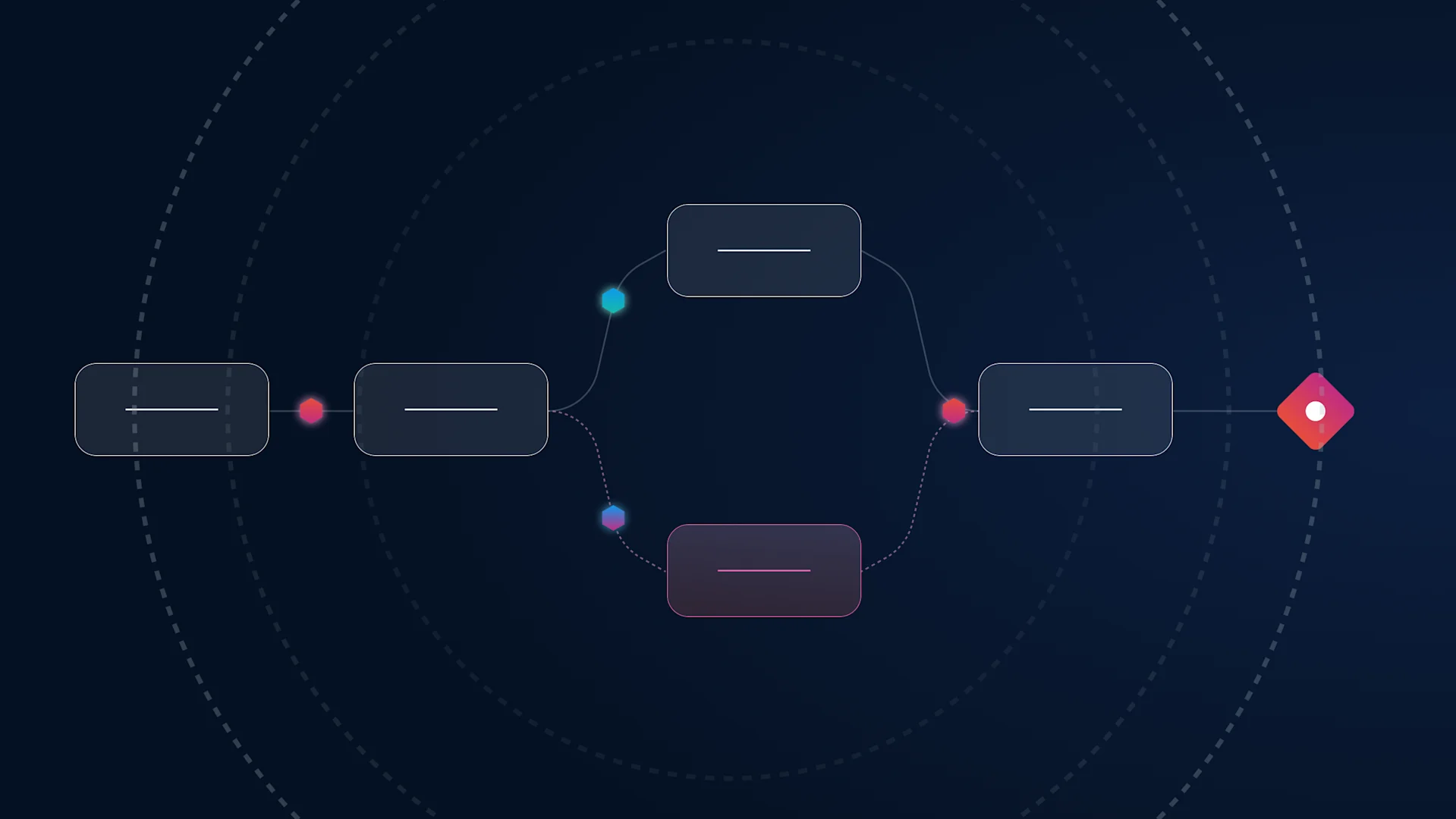
n agentic workflow is more than a multi-agent diagram. See what the standard patterns omit once workflows meet exceptions, oversight, and audit requirements. Primary keyword: agentic workflow
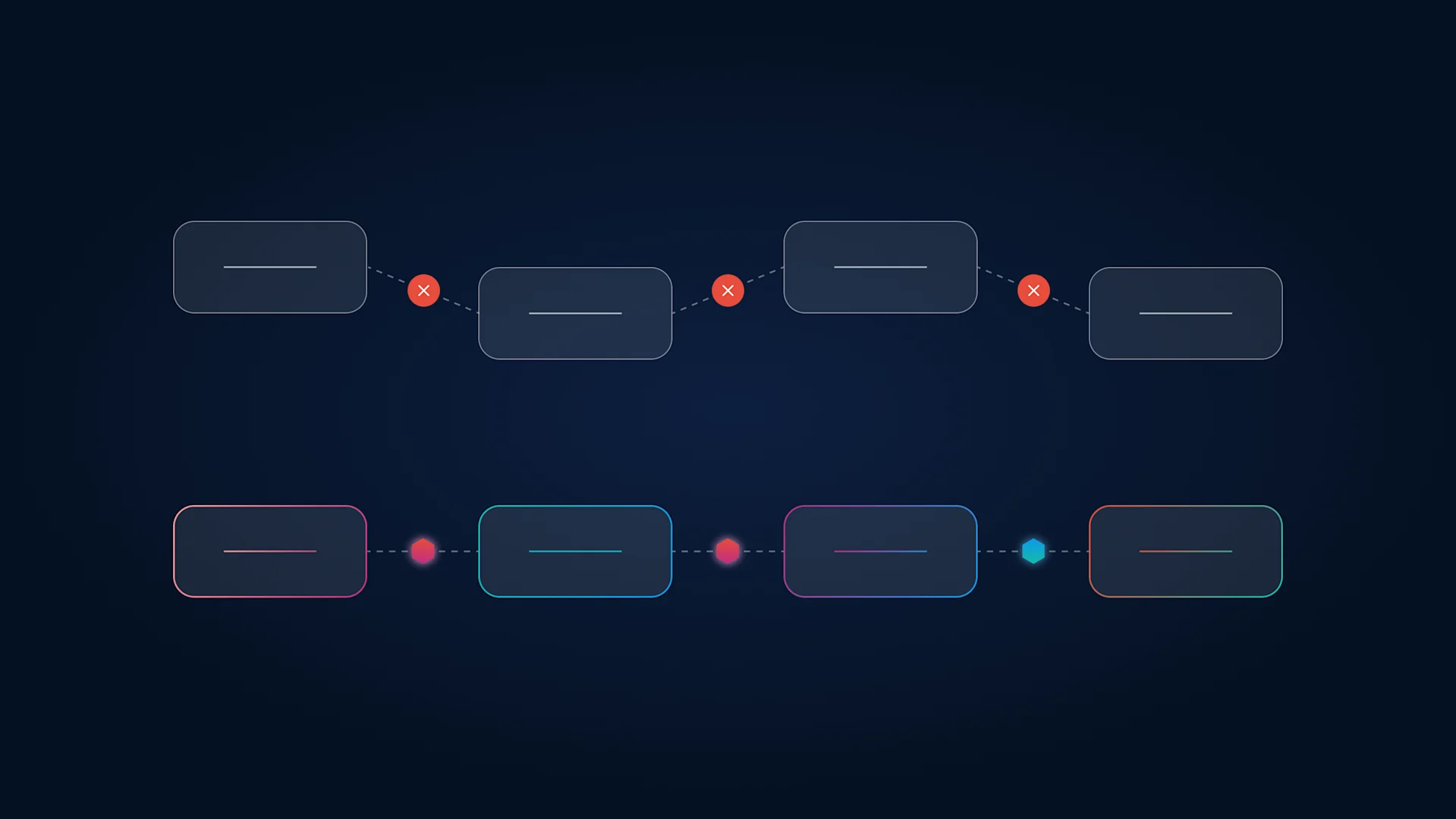
Automating single functions leaves the process broken at the handoffs. See why end-to-end orchestration beats function-by-function financial process automation.
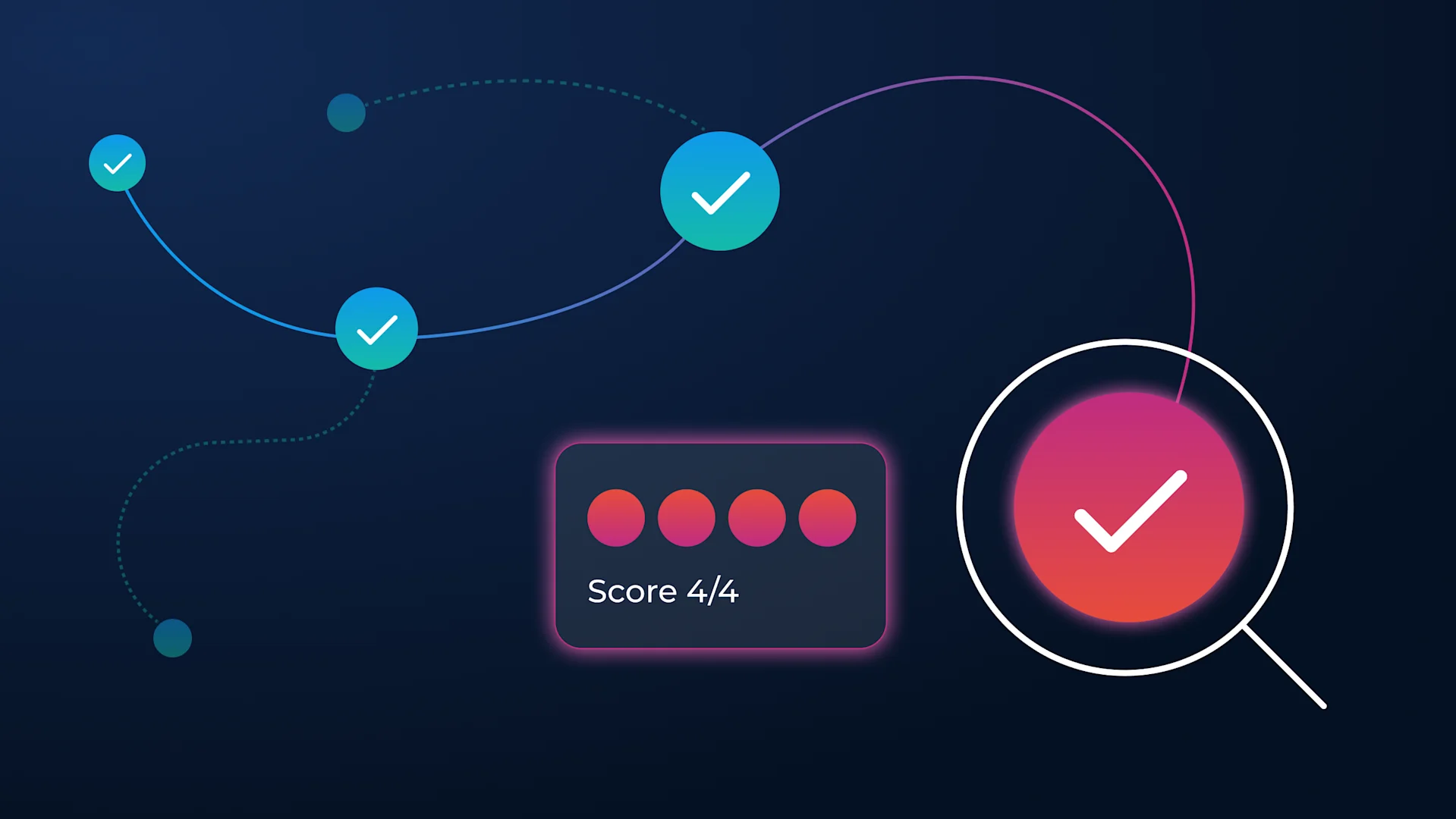
A criteria-led framework for evaluating workflow orchestration tools, covering open standards, governance, exceptions, and lock-in, not another ranked listicle. Keywords: workflow orchestration tools