
Business leaders face pressure as the promise of digital transformation collides with the reality of fragmented operations, shadow processes, siloed data and use of tools, and the growing weight of regulatory compliance. These are the pain points that undermine company goals and the ability to adapt today.
To realize the benefits of digitalization and integrate transformative technologies like artificial intelligence (AI) and orchestrated automation, organizations require: software modeled business processes. Processes built with a sophisticated, central operating layer can bridge the gap between business needs and IT execution. This is where business process modeling and digital business process management (DBPM) platforms enable transformation.
Modern DBPM platforms like Flowable enable organizations to connect strategy to reality through workflows built for scalability and reusability. Modeled processes can then be optimized with automation, AI agent collaboration, and adjusted with drag and drop modeling, transforming operations into measurable, compliant, and highly efficient value streams. Process modeling and management is the backbone needed for safely leveraging intelligent automation, integrating next-generation AI, and is essential for efficient regulatory work at enterprise scale.
For organizations in regulated sectors like banking, healthcare, insurance, and manufacturing, operational excellence is a fundamental compliance mandate. Manual, undocumented, or fragmented processes are compliance time bombs, leaving the enterprise vulnerable to fines, reputational damage, and complex audits.
A modern DBPM approach allows organizations to treat compliance as a feature rather than an afterthought, defining process flows that must include mandatory steps, approvals, data checks, and record-keeping requirements
Business process modeling offers a decisive advantage. The goal is to move beyond documentation to actually embedding governance and compliance into the execution layer.
By standardizing critical work processes, especially those related to customer onboarding, financial transactions, data privacy (GDPR, HIPAA), and internal controls, organizations ensure that compliance is non-bypassable. A modern DBPM approach allows organizations to treat compliance as a feature rather than an afterthought, defining process flows that must include mandatory steps, approvals, data checks, and record-keeping requirements, making adherence an automatic part of the workflow.
Process modelling achieves this, whether modelers are coding or using drag and drop or agent prompting, with process as code (PaC). By defining processes in a structured, executable format like BPMN standards, the business logic, governance rules, and compliance requirements are formalized, and applied consistently and compliantly each time. When new workflows or regulatory changes arise, they are incorporated and deployed through this core system, ensuring rapid and consistent rollout.
Flowable provides the business process modeling software necessary to formalize these processes. Features like mandatory process steps, defined escalation paths, and role-based access controls restrict who can execute certain activities.
This structure includes governed AI agent use, another auditable step in the workflow. For example, using Flowable's decision tables, you can model a policy that automatically routes high-risk transactions for review by a specific compliance officer, making the required check non-negotiable.
A Flowable Document Agent can be configured to check contracts against the latest regulatory standards in real-time, flagging non-compliant clauses for human-in-the-loop review and guaranteeing full traceability.
Most crucially, DBPM systems offer transparent audit tracking. Every action, decision, approval, and data change is automatically logged with time stamps and user identity, creating an immutable, end-to-end audit trail that simplifies regulatory reporting and provides proof of compliance and due diligence during an audit.
A failure point for many digital transformations is a vast gap between the executive boardroom and the operational floor. A strategic vision remains just that, until it is effectively translated into the daily work of the organization. This challenge leads to fragmented execution, where departments chase conflicting priorities, and the introduction of new business models can take years to fully realize.
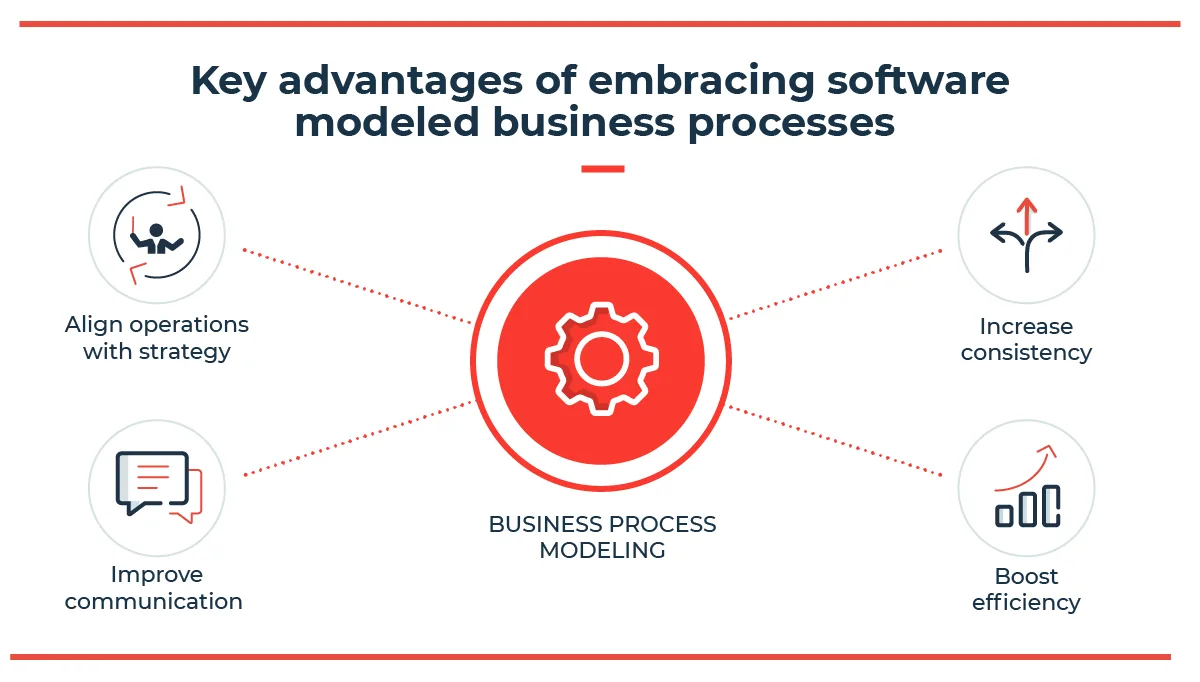

DBPM is the mechanism that ensures executive intent translates directly into operational activities according to how they are modeled. The key advantage is the ability to realize new business models quickly.
By providing a standard language and a common platform for modeling and execution, DBPM minimizes friction. The business side can model what they need to achieve, and the IT side can use that model as the blueprint for how it will be built and integrated with existing systems.
This means a new objective, like launching a new product line or improving the customer journey, can be rapidly decomposed into its required processes, sub-processes, and tasks.
Flowable acts as the central orchestrator, turning static diagrams into dynamic applications. Because it supports open standards, the universal language of automation (BPMN, CMMN, DMN), the Flowable Platform ensures that the modeled processes are immediately ready for technical execution, complete with integration points, user forms, and decision logic. This direct connection means every employee's daily work is aligned with the corporate North Star.
One of the main roadblocks to ensuring business agility is the fragmented IT landscape. Over decades, organizations can accumulate complex webs of disparate systems: legacy mainframes, multiple cloud services, specialized SaaS applications, and siloed automation tools.
For heads of operations this creates friction points, with work spread across a number of platforms, resulting in higher manual effort and a lack of visibility into the end-to-end performance of critical processes that prevents optimization.
A DBPM platform is engineered to ease this friction by binding these disparate systems together. It treats every piece of technology — whether it's an aged internal system, a cutting-edge AI service, or a specialized robotic process automation (RPA) bot — as a service that can be plugged into the overarching business process.
Flowable excels at this end-to-end (E2E) process management. Its integration capabilities allow organizations to design processes that automatically invoke services from the ERP system, retrieve data from the CRM, analyze information using a machine learning model, and pass the outcome to a person or a robotic automation tool, all while acting as the single source of truth for the entire workflow.
Today, successful digital transformation demands collaborative agility and the rapid, organization-wide flow of internal knowledge.
As a process management and automation platform, Flowable democratizes process optimization by empowering citizen developers and business analysts. With drag-and-drop interfaces and reusable components, business users can own, model, and refine their own processes, resulting in faster change, and a reduced time-to-market for operational improvements.
Flowable integrates tools like AI agent models, allowing business experts to design automated logic without writing complex code, and ensuring that the critical knowledge of how the business operates is leveraged by the people who know it best.
Competitive advantage lies in the intelligent integration of advanced automation. As organizations move to leverage AI, ML, and autonomous agents, they confront a challenge: scaling this intelligence both safely and responsibly.
Business process modeling acts as the governance layer for this growth. By designing the overall workflow, organizations create the structured environment necessary for effective AI integration.
Modeling business processes with an enterprise BPM platform is the ultimate guardrail for AI. And the Flowable Agentic Case Platform ensures that every AI-driven decision is executed within the boundaries of a compliant, auditable, and human-in-the-loop process: so by way of design your AI use is enterprise compliant, adheres to business goals, and is connected across the company.
A core, often-understated benefit of a modern Business Process Management (BPM) platform is the creation of a unified knowledge capital. By modeling and executing processes in a central system, organizations move critical business logic and process know-how out of fragmented silos and into a common, executable framework. This common framework ensures that business-critical knowledge is consistently applied and available to everyone who needs it, regardless of their department or location.
Crucially, a BPM platform enables data and knowledge to be available across systems and teams, as well as within cases on-demand. Instead of relying on individuals or searching disparate repositories, every team member gains immediate, contextual access to the information and process steps required to handle a case. This capability is supercharged by embedded intelligent agents. For example, the Flowable Knowledge Agent is designed to analyze the platform’s comprehensive process data and connected system information. The Flowable Knowledge Agent connects scattered documents, manuals, and data across internal and external knowledge bases and delivers the synthesized information in-context. Integrated directly into a process flow, this agent can retrieve, analyze, or generate insights, delivering the precise knowledge needed for a human worker or another agent to make a compliant and informed decision, instantly, and within the context of the running case. This transforms fragmented organizational data into actionable, business-wide intelligence.
To ensure long-term success, IT teams should focus on the operational structure surrounding the platform:
Establish a center of excellence (CoE): Establish a cross-functional CoE dedicated to developing standards, sharing best practices with citizen developers and business analysts, and governing the DBPM platform.
Prioritize training: Invest in formal training for your internal teams to maximize the platform's capabilities.
Leverage cloud and on-demand expertise: Choose a fully managed, cloud-native service like Flowable Cloud to abstract away infrastructure management, automatic upgrades, and security patching. Utilize the platform's Cloud included on-demand expertise and specialist support as an extension of your development team, eliminating the need to hire specialized contractors for temporary project acceleration.
The shift from siloed operations to resilient, AI-powered processes requires a disciplined approach. Here are three steps to implementing strategic business process modeling for DBPM:
Assess your process debt: Identify 2-3 high-risk, high-volume processes that span multiple departments.
Unify the execution layer: Select a unified platform like Flowable, that supports process, case, and decision management across systems, software suites, and teams.
Establish AI guardrails: Use the DBPM platform to govern any AI decision, ensuring its input is auditable and accountable.
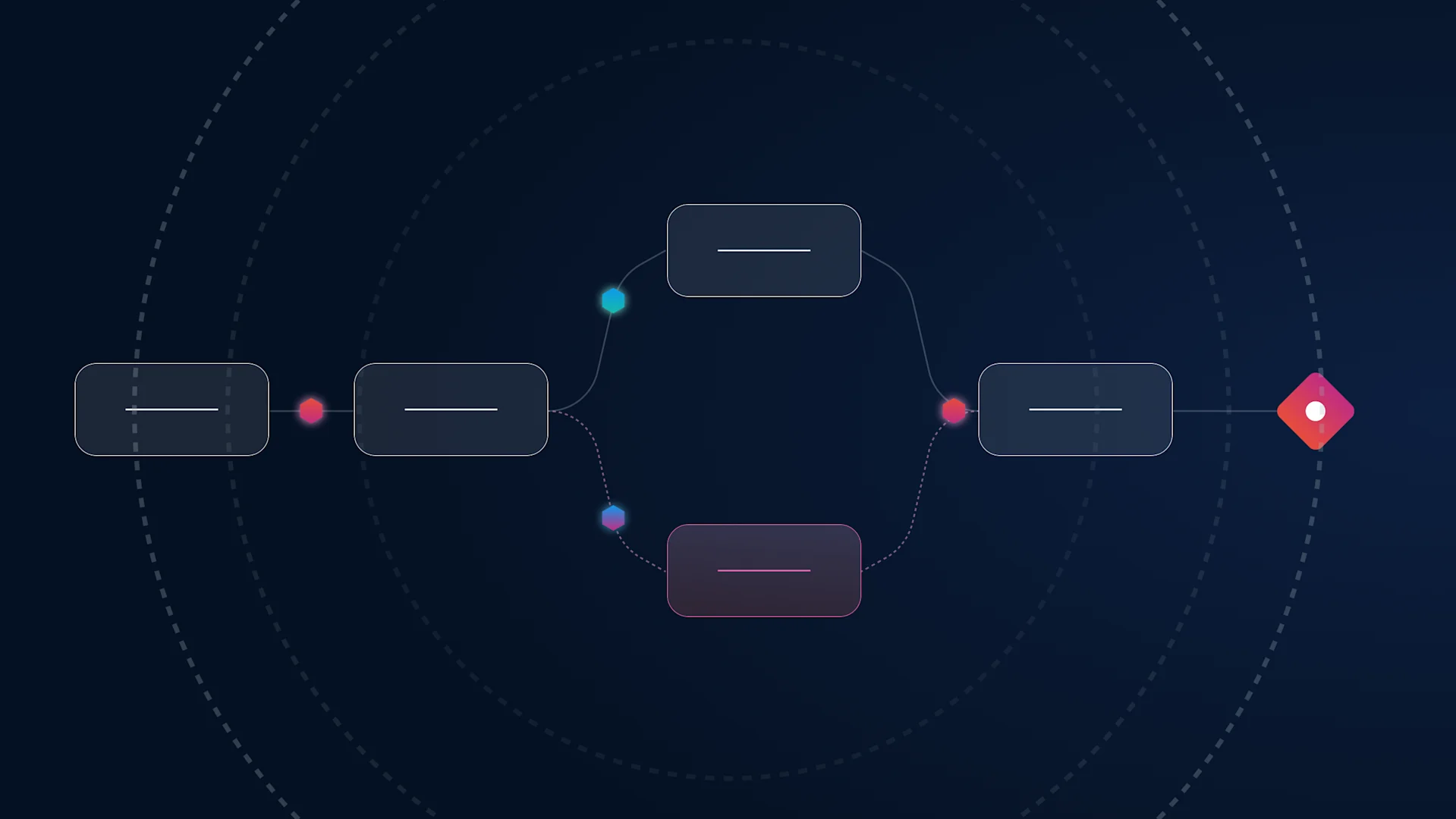
n agentic workflow is more than a multi-agent diagram. See what the standard patterns omit once workflows meet exceptions, oversight, and audit requirements. Primary keyword: agentic workflow

Automating single functions leaves the process broken at the handoffs. See why end-to-end orchestration beats function-by-function financial process automation.
A criteria-led framework for evaluating workflow orchestration tools, covering open standards, governance, exceptions, and lock-in, not another ranked listicle. Keywords: workflow orchestration tools